Chapter 8

The Painted Shore

1830–1900 · Writers, painters, steamboats, and the resort the famous built

One of the most beautiful combinations of land and water in America.

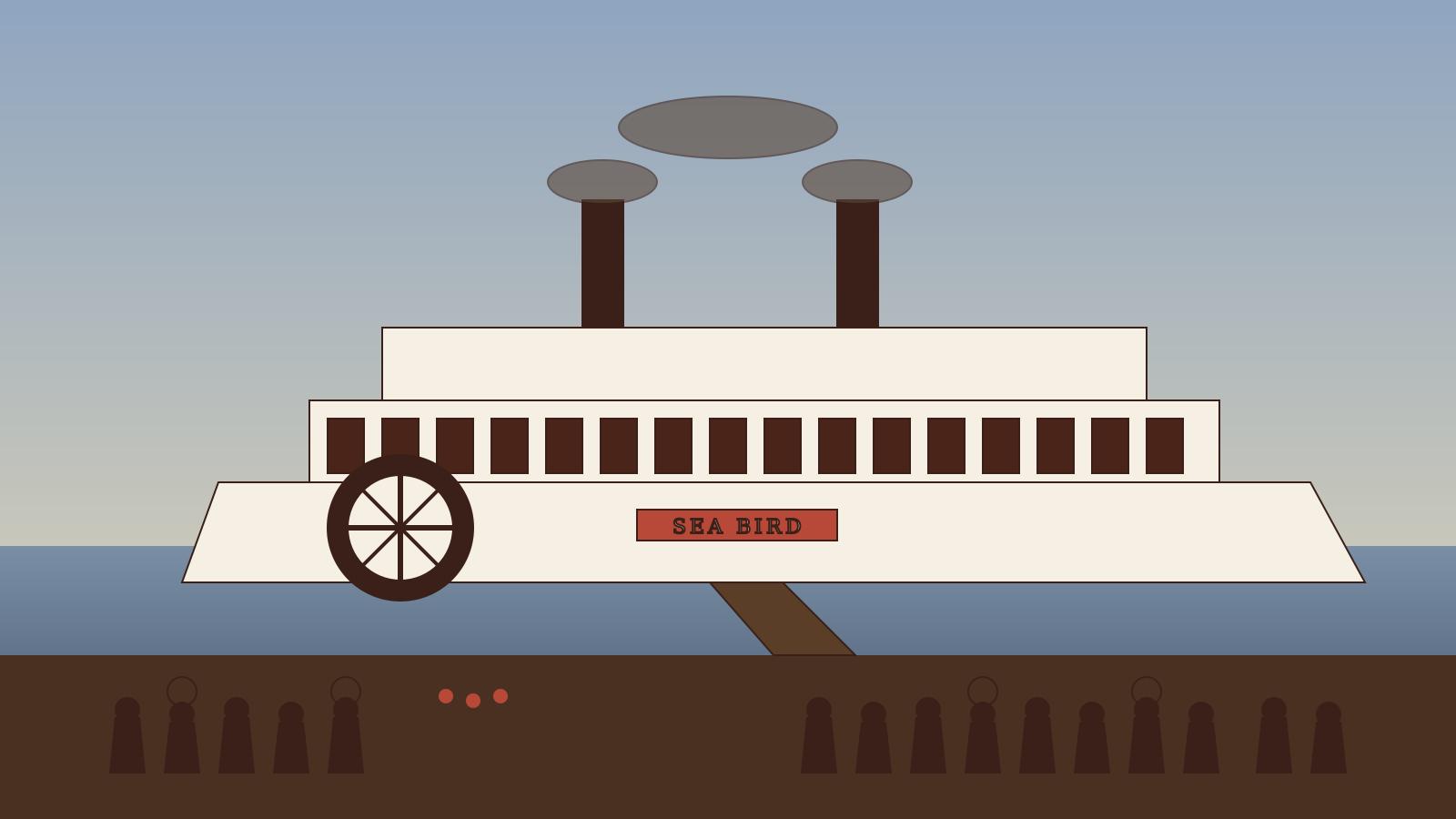
A paddlewheel steamboat approaching the Highland Beach pavilion pier at sunset, ca. 1878, colorized
COLORIZED

Placeholder illustration for Phase 0 — replace with archival photograph before publishing.

The century between eighteen thirty and nineteen hundred took a working coast and painted a resort onto it, and the paint kept its color long enough that a lot of it still shows. It began with a novel and a paddlewheel and ended with a rail bridge and a colony of architect-designed cottages on the hillside. In between it drew in Cooper and Whitman, Harper's correspondents nearly every summer, theatrical royalty from Broadway, and — on peak Saturdays — three thousand day-trippers a day off the boats.

The people already here — the fishermen, the clammers, the pilots, the farmers on the ridge — did not disappear. Harper's wrote them into the same paragraph as the yachtsmen. That is more or less how it went.

Placeholder narrative for the Phase 0 prototype. Real copy will draw from James Fenimore Cooper's The Water-Witch (1830), Walt Whitman's Fancies at Navesink (1885), the Harper's Weekly file at the Highlands borough archive, Rick Geffken's Two River Times local histories, and the NRHP Water Witch Club nomination file.

The first steamboat, the Saratoga, arrived in eighteen thirty. The paddlewheel era ran from that date to the automobile drawn-out end of the eighteen-nineties, and its peak years were the seventies and eighties. The Sea Bird, the Albertina, the Jersey Lily, the Our Mary, the Long Branch, the Chrystenah — names that fill the maritime pages of the Highlands borough archive. Seven round trips a day at peak. Three thousand passengers a day off the wharves.

You cannot walk the modern boardwalk without stepping over their foundations. The pier pilings that survive at low tide off Bay Avenue are steamboat pilings.

A summer Saturday at the Highland Beach pier, 1878 — the Sea Bird disembarking a full deck, day-trippers with parasols and coats, a brass band on the wharf

Twelve hundred passengers, a brass band on the wharf.

Placeholder — stand-in for Harper's Weekly 1878 illustration.

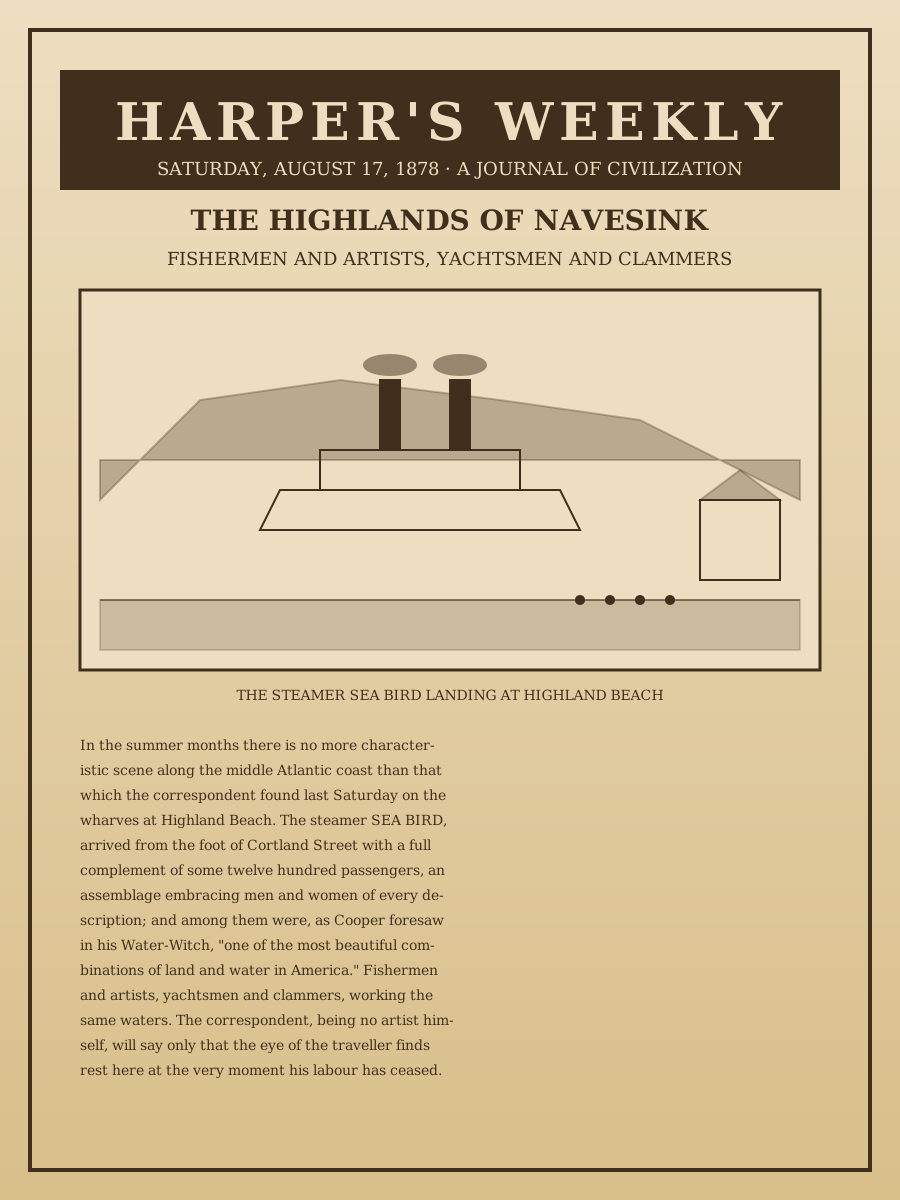
A page from Harper's Weekly, August 1878, featuring an illustrated correspondence from the Highlands — a woodcut of the Sea Bird arriving and a column of type on Fenimore Cooper's Water Witch shore
COLORIZED

Placeholder — stand-in for Harper's Weekly, Aug 17, 1878.

*Fishermen and artists, yachtsmen and clammers.* Harper's, 1878.

Harper's Weekly, in its capacity as the great illustrated general- interest magazine of the century, sent a correspondent to the Highlands nearly every summer through the seventies and eighties. The August seventeenth eighteen seventy-eight issue is the one most often quoted from — the woodcut of the Sea Bird landing, the column of type opening with the sentence about fishermen and artists, yachtsmen and clammers, working the same waters. The line was the correspondent's, not Cooper's. Cooper had done the combinations of land and water half a century earlier and the correspondent knew everyone in his audience had it in mind.

Both lines are worth what has been made of them.

The chain that made three thousand day-trippers a day possible on a peninsula reachable only by boat had four links.

The Seashore Railroad, built to Long Branch in eighteen sixty-five, carried people to the mainland end of the trip. The first drawbridge across the Shrewsbury River, built in eighteen seventy-two, put the Hook itself within a carriage ride of the railroad terminus. Trolleys carried them the last mile. And in eighteen ninety-two the rail bridge across the Shrewsbury replaced the drawbridge for through service — which meant the express trains from Manhattan could land on the Hook itself without the reader ever leaving a seat.

The paddlewheel steamers stayed profitable through this whole period. The route in from New York Harbor was faster by water than by rail. The train mattered because you could get back on it after the last boat left.

Ferdinand Fish came up with the Water Witch Club in eighteen ninety-five. Cooper had died forty-four years earlier and the novel had sunk into that middle stratum of American letters where a name survives longer than a plot. Fish borrowed the name, bought a hillside, hired the same architects who were building the Tuxedo Park colony up the Hudson, and planted a summer colony of Shingle- style cottages on the highest ground between the Twin Lights and the harbor.

The men who summered here in the first cohort were bankers and publishers and one Broadway theater owner. The children they raised here included a Pulitzer editor, a state Supreme Court justice, and the woman who eventually wrote the National Register nomination that saved the district in two thousand and four.

The cottages are still there. Most are still occupied. From the porches at the top of the path you can still see the same shore Cooper described and the same steamer pilings the Sea Bird tied to.

The Water Witch Club colony on the Highlands hillside, ca. 1895 — a row of Shingle-style summer cottages against the bluff, colorized
Then COLORIZED

Placeholder — stand-in for period colorization.

Now

Placeholder — stand-in for ATH matched shoot.

Ferdinand Fish's biography does not scan neatly. He was born in Brooklyn in eighteen forty-eight, made his money in coal, spent a decade of his adult life running a shipping-agent business out of what is now the Fish House on Waterwitch Avenue, and in his fifties reinvented himself as a real-estate developer of one extremely specific hillside colony.

The Water Witch was his project. The name came from Cooper. The architectural language came from the architects. The financing came from the men he'd sold coal to, most of whom bought the first row of cottages sight-unseen. Fish himself moved into cottage number three and stayed until nineteen twenty-eight.

He is buried in the small cemetery behind the club's dining pavilion. The gravestone says only Ferdinand Fish, of the Water Witch.

The steamboat era ended by nineteen thirty-two. The automobile ended it. The trolleys were pulled up. The grand hotels became boarding houses became apartment buildings became empty lots. The Water Witch survived because the families that founded it kept coming, and because their children kept coming after them, and because the Shingle-style cottage turns out to be a remarkably durable building.

The shore in Cooper's phrase is still here. Every scene in every chapter that follows is one Cooper would have recognized. So is the particular quality of light at four in the afternoon in August that the Harper's correspondent kept trying and failing to describe.