Chapter 12

Rum Row

1920–1933

The bootleg capital of the East — and the town that built the boats.

A dark harbor at night with a distant lighthouse beam sweeping over silhouetted boats

Placeholder illustration for Phase 0 — replace with archival photograph before publishing.

Prohibition landed like weather — wet in the mouth, dry in the ledger — and Highlands' geography did the rest. First stop inside the Hook. Fastest boats on the coast. A straight shot to the biggest thirst in America.

For thirteen years the water gave and the powerful took, and the town in between built the boats that outran the cutters.

This is placeholder narrative for the Phase 0 prototype. Real copy from the content spec, John King's Stories from Highlands, and the ATH archive lands before publication.

Every rum boat that mattered launched from the same shore. The Twin Lights threw a beam that could be read at sea; the peninsula sheltered a fleet of skiffs redesigned for a single task; and the current out of the Narrows carried a crew north with the wind on their shoulder.

Silhouette of Sandy Hook at dusk, low cedar and holly against a pale grey sea

First stop inside the Hook.

Placeholder — stand-in for a NPS Gateway aerial.

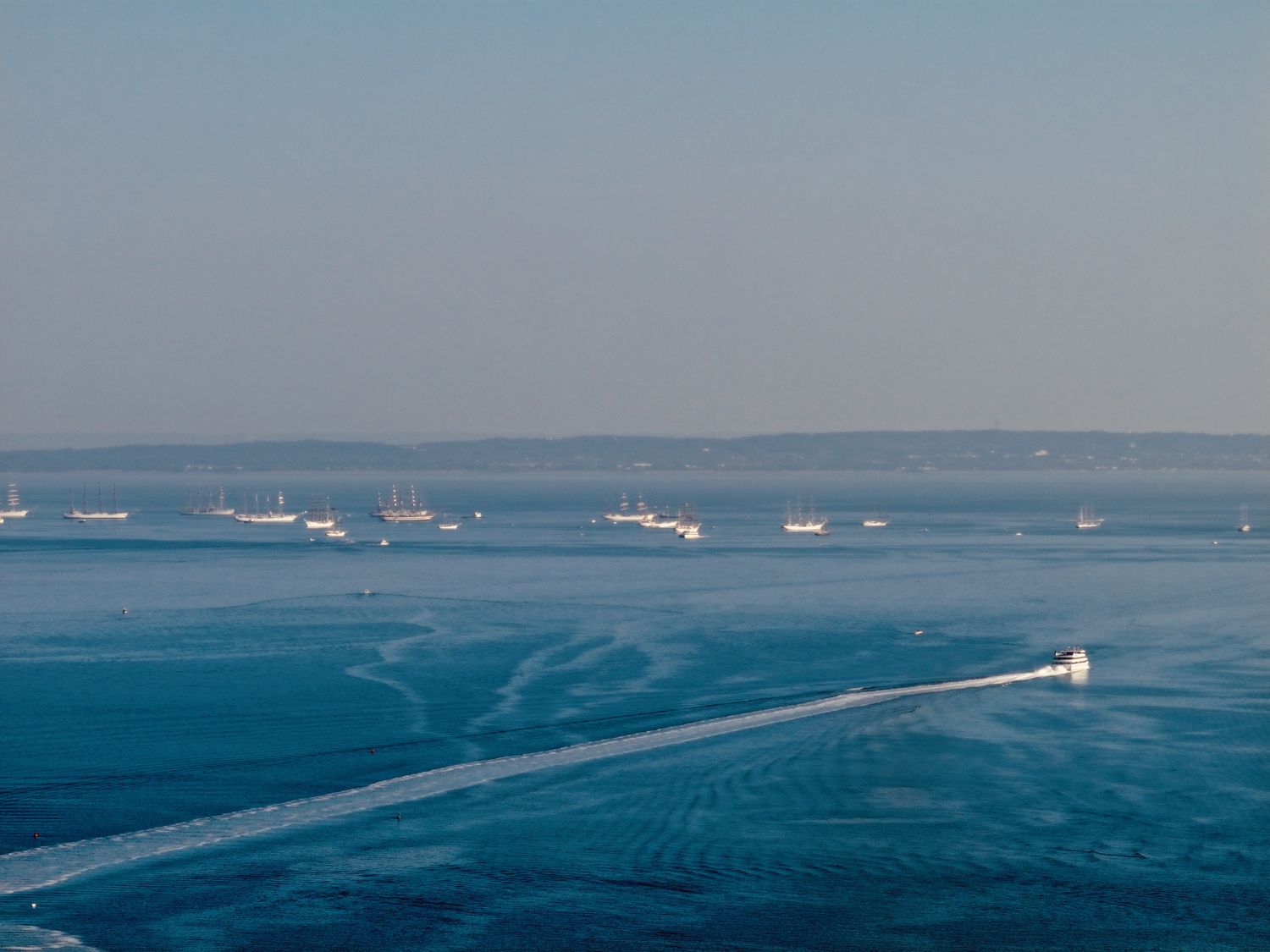
Three miles offshore, then twelve — the line moved out in 1924, and the fast boats followed it. The mother ships anchored on the far side and waited for the smaller runners to come out at dusk. From the Twin Lights bluff you could sometimes see the anchor lights in a slow arc, like a false constellation.

Follow the runners

The map above traces the geometry: the anchored fleet, the Highlands boatyards, the Atlantic Highlands crews. Every scene of the story sits inside these four points.

Where the Bamboo Gardens stood, dune grass has taken back most of the ground. The dance pavilion — William Sandlass Jr.'s answer to the automobile era — survived the Volstead Act by becoming its center; a merry-go-round, a movie airdrome, and a rumor of what happened after the last coach came in.

The Army took the last ten acres in 1962. The state took the ten acres after that. What the sea did not finish, eminent domain did. Only the outline remains in the sand.

A hand-tinted view of the Bamboo Gardens dance pavilion at Highland Beach, ca. 1922, colorized
Then COLORIZED

Placeholder — stand-in for Sandlass Family Collection colorization.

Now

Placeholder — stand-in for ATH matched shoot.

Bill McCoy ran his Scotch in from the Bahamas and refused to cut it, and the phrase "the real McCoy" comes from a man who wouldn't water his product. Highlands boatmen bought his cases at eighteen dollars, ran them past the Coast Guard at forty, and delivered them in New York for ninety. The margin paid for the fastest workboats ever built on this coast.

By 1933 the Twenty-First Amendment closed the trade and the boats turned to fluke and stripers. The captains kept their engines, and the sport-fishing capital of the Jersey Shore inherited the fleet — a lineage the party boats at Bahrs still carry today.